
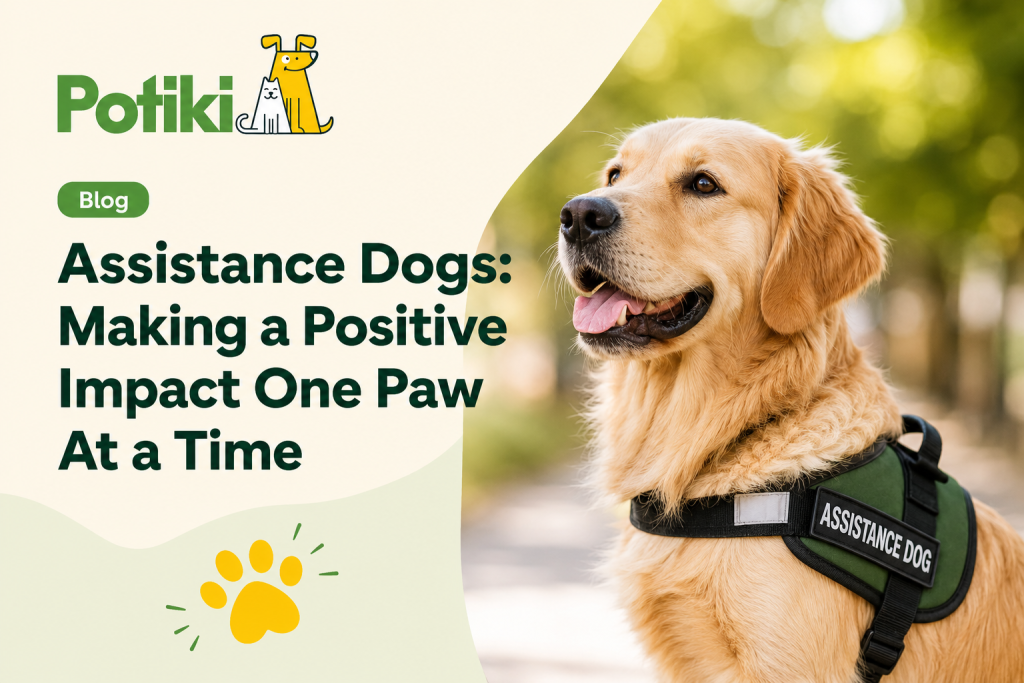
Animals instantly bring joy to everyone they come into contact with and have been shown to improve our mental health and well-being. This is why the presence of assistance dogs is such a positive and uplifting experience for the people who need them the most.
Assistance dogs can provide companionship, love, and medical aid to people with visual and hearing impairments, disabilities, or chronic illnesses.
Continue reading to learn everything you need to know about owning an Assistance dog in Australia.
What is An Assistance Dog?
An assistance dog is a dog that has been specially raised and trained to provide assistance and guidance to people with disabilities, illness and visual and hearing impairments. They are able to give people greater independence and confidence as well as provide affection and companionship, enriching their lives.
The Different Types of Assistance Dogs
In Australia, the different types of assistance dogs include:
Guide dogs: Guide dogs are the first type of assistance dog most people will think about. They assist people with visual and mobility impairments by guiding them through daily life and helping them overcome physical obstacles that could cause harm. Guide dogs are specially trained to stop at kerbs, avoid potential hazards and guide them to their destination safely.
Guide dogs require about two years of specialised training.
Mobility assistance dogs: Assist people with physical disabilities by providing balance and guidance, retrieving items, opening doors, and safely guiding them throughout daily activities.
Mobility assistance dogs require two years of specialised training.
Hearing dogs: Trained to assist people with hearing impairments by alerting them to important sounds, such as smoke alarms, evacuation alarms, doorbells, and crying babies.
Their training takes anywhere from several months to a few years and is centred around task-specific behaviours.
Medical alert dogs: Medical alert dogs are specially trained to detect, alert, and respond to certain medical conditions such as seizures, changes in blood sugar levels, low blood pressure, allergens, and fluctuations in heart rate.
Their training usually takes anywhere from 18 to 24 months and includes foundational obedience skills and advanced scent and alert detection.
Psychiatric service dogs: Psychiatric service dogs offer support for people who suffer from mental health conditions, including anxiety and PTSD (post-traumatic stress disorder). They offer affection and a calming presence in stressful situations, interrupt panic attacks, wake their owners from nightmares, and help them calm down.
Psychiatric service dogs require 18 months to 24 months of training.
The Training Process
The L-Plate Stage (2-12 Months Old)
Puppies begin their training at 8 weeks old in Puppy Kindy, where they are toilet trained, taught to walk on a lead, and taught how to follow simple commands.
When they are around 15-20 weeks old, they are placed with a Puppy Volunteer, who donates their home and time to raise the puppy into a well-mannered dog that socialises well with other dogs and humans and is used to various sights, sounds and smells. This includes taking them on public transport and taking them into busy environments, such as shopping centres.
All vet and food bills are covered by Assistance Dogs Australia.
P-Plate Learning (12-18/24 Months Old)
After spending 12-18 months with their Puppy Volunteer, the puppies graduate to the advanced training stage, where qualified instructors teach them to follow more complex commands.
The dogs are taught all the various skills needed to help their future owner with everyday life. Each dog is carefully trained based on their personality, learning style, and the type of person they will be assisting.
The trainers are continuously assessing each dog to determine which client they can best match with.
During this stage, the dogs undergo several hours of training per day, while on the weekends, advanced dogs will enjoy some downtime and affection in the home of our volunteers.
Making the Perfect Match
When a potential match has been made, we will get to know that person and help them adjust to having their own assistance dog. Check-ups and training classes regularly take place during the first three months.
Once the assistance dog and their owner are settled, they will be visited by a staff member from Assistance Dogs Australia at least once a year to conduct a Public Access Test (an assessment that evaluates an assistance dog’s safety and behaviour in public spaces).
Assistance Dog trainers continue to support each client and are always on hand to help with training or issues that may arise.
Lifetime
Assistance dogs stay with their clients for 8-10 years before they retire and move to a loving home (usually a family member of the client). Their clients may request another assistance dog.
What Are the Benefits of Assistance Dogs?
The benefits of assistance dogs include:
- Increased independence: People with disabilities feel more independent with an assistance dog by their side. Assistance dogs can pick up fallen objects, fetch certain items, open and close doors, press buttons, and help with laundry. They also help their owner travel safely and independently in public.
- Assistance with mobility: Assistance dogs can help their owners safely navigate streets, stairs, public transport, busy public areas, and other physical obstacles, so they can move around without relying on other people or carers.
- Safety: People with an assistance dog feel safer while out in public and in everyday life. Assistance dogs can alert vision and hearing-impaired people to threats and dangers they may not be aware of, let people suffering from a chronic illness know when they will have a seizure, or have low blood pressure and calm down a person suffering from anxiety or PTSD before they can have a panic attack.
- Social connection and emotional support: Assistance dogs not only provide their owner with compassion and companionship but also enable them to get out of the house and socialise with others in their local community.
- Reduced stress levels: An assistance dog’s presence automatically reduces stress and anxiety and boosts serotonin levels.
- Seek help/assistance: Assistance dogs are trained to seek help or attract attention if needed.
Important Factors to Consider
Some of the important factors to consider when thinking about getting an assistance dog include:
- Is the dog specially trained for your needs? Some assistance dogs do better with the vision and hearing impaired, while others work best with people who suffer from anxiety or PTSD.
- Able to handle physical demands: Large dog breeds such as golden retrievers and labradors are better suited for people who need more mobility support.
- Get an assistance dog through verified channels: Ensure your assistance dog is provided by accredited, registered charities such as Assistance Dogs Australia or Smart Pups. This ensures that your dog is properly trained and comes from a reputable breeder.
- Are you ready for the attention? Having a dog with you in public will undoubtedly attract attention, especially from children who get excited about seeing a dog in public. You may also be asked questions about your assistance dog and why you need one.
- Access to transportation: If you do not drive, you will need to organise transportation to get your dog to different training areas (shops, parks, trains, etc).
- Is your home suitable for an assistance dog? Make sure your home is safe and comfortable for assistance dogs. This includes:
- Clearing out any toxic or dangerous items that may bring harm to your dog.
- Creating wide-open spaces in the home so your dog can navigate around safely.
- Keeping all electrical cords out of the way.
- Ensuring that the yard is fenced in.
- Creating a designated area for your dog to rest and sleep.
- Keeping their food and water bowls in easy-to-access areas.
It’s important to remember that, at the end of the day, assistance dogs are still animals that are curious and can get into mischief.
Accredited Assistance Dog Organisations in Australia
In Australia, there are several trusted and licensed organisations dedicated to training assistance dogs to the highest standards and accredited by Assistance Dogs International. These organisations include:
- Assistance Dogs Australia: Assistance dogs for people with mobility issues, autism and PTSD.
- Guide Dogs Australia: Assistance dogs for mobility issues, the visually-impaired and autism support.
- Seeing Eye Dogs (SEDA): Assistance dogs for the visually impaired.
- Australian Lions Hearing Dogs: Assistance for hearing-impaired people.
- The Royal Society for the Blind, Guide and Assistance Dog Service: Assistance dogs for the visually impaired, and for people who suffer from autism and PTSD.
- Righteous Pups Australia, Inc: Assistance dogs for medical alert, mobility, and autism support.
- Life Unleashed: Assistance dogs for people who suffer from PTSD (in particular, first responders and veterans).
Having an assistance dog is incredibly rewarding and makes a positive difference to everybody they come in contact with, especially their owners. However, they are also dogs and require the proper care and training to enrich both their lives and yours.
At Potiki, we understand how precious your pets are. We also know that the unexpected can happen at any time, resulting in extremely high vet fees. These unforeseen circumstances are why it is best to be prepared with pet insurance. Potiki offer our customers flexible covers with excess and extras to give you and your family peace of mind. Visit our website to obtain a quick quote and explore our various coverage options.
FAQs
Yes, assistance dogs are typically covered by standard pet insurance policies.
The following government and non-profit organisations can help provide financial assistance for assistance dogs:
- NDIS: The NDIS may help to fund an assistance dog if your support goals require one.
Funding goes towards upfront vet costs and maintenance.
- My Aged Care: Funding for assistance dog support may be included in aged care packages.
- Department of Veterans’ Affairs (DVA): Eligible veterans with mental health conditions, like PTSD, can get financial assistance via the Psychiatric Assistance Dog Program (PAD).
This financial support can cover veterinary fees and maintenance.
Guide Dogs NSW: Tailored financial assistance packages are available to help maintain the health of your assistance dogs.
To apply for an assistance dog in Australia, you must follow these steps:
- Referral from health professional: Your doctor, occupational therapist or psychologist/psychiatrist must complete an assessment that states how an assistance dog will make a positive impact on your disability and life.
- Apply for an assistance dog: You can apply through an accredited organisation.
- Suitability assessment: The provider/organisation will conduct home visits to ensure your home is suitable for an assistance dog and that you are ready to own one.
- Training and matching you with a dog: You will be matched with a specially trained dog or undergo a specialised training program.
- Public Access Test (PAT): You and your assistance dog need to pass this test to receive legal public access rights and accreditation.
Yes, you can train your own assistance dog. However, your dog will need to meet incredibly high standards regarding their behaviour, hygiene and public-access requirements.
There are different state regulations for registering assistance dogs in Australia. By law, assistance dog owners/handlers are not required to carry any ID for their dog. However, all assistance dogs will need to wear identifiable harnesses or coats.
Assistance dogs are highly trained dogs and aid people with mobility issues, the hearing impaired, and the visually impaired, people who suffer from diabetes and people who have PTSD and other mental health conditions. They provide specific and life-changing tasks.
Therapy dogs are trained to work with a variety of people, boost overall mood and morale, and reduce anxiety and stress. They are ideal for schools, hospitals or aged care facilities.