
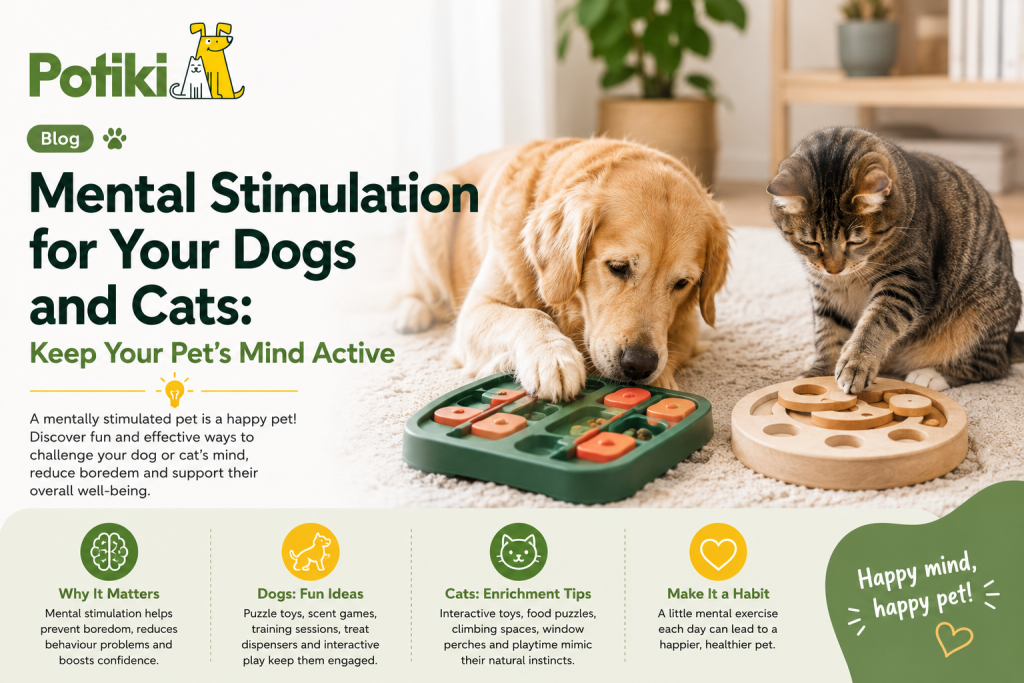
Just like humans, an animal’s mind also needs mental stimulation to stop boredom in its tracks and to keep its mind sharp and active. Our furry family members can get bored, especially when left alone, and are also prone to cognitive decline as they get older. The key is to prevent these things by providing your dog or cat with puzzle games, toys, and training sessions that keep their minds active, engaged and entertained.
Continue reading to learn about the best ways you can provide your pet with mental stimulation and the many benefits of keeping your pet’s brain busy and active.
Why Does Mental Stimulation Matter for Your Pet?
Mental stimulation for your furry family member is just as important as physical activity. Dogs and cats are intelligent animals who need daily mental stimulation. In the wild, they spend their days hunting, foraging, exploring and problem-solving. When they are domesticated, they don’t lose those natural instincts, but they may not always have the same opportunities to display those skills, which is where you come in. Providing your pet with both physical and mental stimulation means you’re helping your beloved furry family member live their best lives.
What Are the Signs That Your Pet is Bored?
If you notice that your dog or cat is more subdued and quiet than usual, you may automatically worry that they are sick, but another possible explanation is that they may just be bored, which, luckily, is a lot easier (and more fun) to resolve.
If you notice the following signs in your dog or cat, it could mean that they need more mental stimulation:
- Lethargy or low moods: Your dog or cat is more lethargic and less active than usual.
- Destructive behaviour: Your dog or cat is suddenly in destruction mode: chewing and scratching up furniture, scratching walls, or digging up the garden.
- Signs of Hyperactivity: Your dog or cat is more restless than usual, pacing, chasing their tail, or is unable to stay in one spot for long.
- Vocalness: Your pet may be more vocal than usual for no obvious reasons.
- Attention-seeking behaviours: Your dog or cat may start knocking things over, jumping up on furniture, or playfully nipping you to get attention.
- Extra hyper greetings: Your dog becomes over-excited and hyper when you arrive home from being out. This includes actions like running around, jumping on you, and excessive, loud barking.
- Over-grooming: Your cat, in particular, may begin to over-groom, which can sometimes result in bald patches.
The Benefits of Mental Stimulation for Dogs and Cats
There are many benefits to providing your dogs and cats with mental stimulation. These include:
- Reducing anxiety and stress: Activities like scent games or puzzle feeders help release pent-up energy, allowing your dog or cat to stay calm and relaxed.
- Preventing cognitive decline: Keeping your pet’s brain active can help delay it, especially as they get older. It also helps brain development in puppies and kittens.
- Display natural instincts: In the wild, dogs and cats hunt and forage. Providing your pets with mentally stimulating games and activities allows them to display their natural instincts.
- Strengthens your relationship with your pet: Playing games and engaging in activities with your beloved pet builds trust and strengthens your bond.
- Keeps your pet entertained and busy: Everybody feels bad about leaving their pet at home alone while they go off to work or school, but providing your dog or cat with stimulating games, toys, and activities keeps them entertained and distracted while you are gone.
- Improved digestion: Providing your pet with puzzle feeders, such as snuffle mats, helps them eat more slowly, which aids digestion.
- Better sleep: If your pet is mentally and physically stimulated throughout the day, they are calmer and more relaxed at night, resulting in better sleep.
Best Mental Stimulation Ideas for Dogs
Dogs are naturally curious and social creatures who were often bred with certain traits in mind: to hunt, herd, or guard. Those natural instincts don’t disappear in pet dogs, which means you have to nurture those traits. The best mental stimulation puzzles and activities for dogs include:
Puzzle Feeders (Snuffle Mats)
Puzzle feeders allow your dog to work for their food rather than having it given to them in a regular food bowl. Puzzle feeders get your dog to practice their natural foraging instincts and can make mealtime fun and rewarding.
Snuffle mats are one of the most popular types of puzzle feeders that bring out your dog’s natural sniffling and foraging instincts. All you have to do is spread dog treats or dry kibble across the mat, ensuring they fall into the holes and fabric folds so your dog can use their nose and paws to get the food out.
For a cheaper, DIY option, you can use a cardboard box filled with their dry food and let them destroy the box to get the food out.
Scent and Nose Games
Dogs have an incredible sense of smell. Put that to good use by playing ‘nose games’ with your dog. Simply scatter dog treats or dry kibble across your yard or around your house, then let them go on a hunt for them.
Interactive Play
Games like fetch, hide and seek, tug of war and building an obstacle course for your dog aren’t just boredom busters or exercise; they allow your dog to exercise their brains, as they have to focus, concentrate, remember and make decisions.
Interactive Feeding Station
Another idea to make feeding time challenging and rewarding is to create a little obstacle course for your dog to reach their food bowl. This activity allows your dog’s natural hunting instinct to kick in.
Treat-Dispensing Ball
Get a tennis ball and cut an X shape into it, filling it with your dog’s favourite treats. As your dog plays with the ball, it lets out treats, turning playtime into a fun, mentally stimulating experience.
Frozen Toys and Treats
This one is great for those warmer summer months: freeze your dog’s favourite treats and toys in water so they cool off while playing.
New Commands and Tricks
No matter how well-trained your dog is, there are always other tricks and commands you can teach them to encourage and strengthen their problem-solving skills. Even just 10 minutes of command training per day makes a big difference to your dog’s mental wellbeing and happiness.
Socialisation and Introducing New Environments
Most dogs get excited about new sights and experiences, as well as meeting new dogs. Take your dog on new walking routes, to dog parks, or to dog-friendly cafes and beaches. Also, schedule playdates with other dogs to keep them engaged, socialised, and mentally stimulated.
Sandpits
A dog’s natural instinct is to dig and bury things. Turn this into a fun activity for your dog by making a sandpit, burying your dog’s favourite toys and treats in it, and letting them dig for them. This activity is both mentally and physically stimulating, and, as a bonus, it keeps your dog from digging up your garden beds.
Best Mental Stimulation Ideas for Cats
Compared to dogs, cats are independent and can often entertain themselves, but that doesn’t mean that they don’t get bored. Indoor cats, in particular, may be more prone to boredom, as they don’t have the naturally stimulating environment of the outdoors to explore. Set up your cat with mentally stimulating games and activities that include the following:
Cat Puzzle Feeders and Snuffle Mats
Just like dogs, cats are also natural hunters and foragers. Make them ‘hunt’ for their food by introducing puzzle feeders, including the following:
- A reach feeder: Your cat has to sniff out and reach for their food.
- A slow feeder: Slowly releases food as your cat plays with it.
- Snuffle mats: Spread catnip or cat treats on a snuffle mat and let your cat seek them out.
- Hidden treats in a box: Use an old jewellery box with compartments or make your own box with different parts, and hide dry cat kibble or treats in each compartment, letting your cats use their problem-solving skills to find them.
- Muffin tin: Turn an old muffin tin upside down and spread cat treats or kibble across it. Your cat will have to nudge the food free before they can eat it.
Laser Pointer, Feather and Wand Toys
Encourage your cat’s predatory instincts by moving a laser pointer or feather-and-wand toys in unpredictable ways (fast and slow, up and down) to mimic prey movement. Your cat will go crazy (in a good way) trying to catch these toys. This activity is a great mental and physical workout for your cat.
Catnip Bubbles
There are specially formulated catnip bubbles that can keep your cat entertained for hours. Sit down, blow bubbles, and watch your cat go wild for them.
Window Perches or Bird Watching On Screens
Set up a comfortable place near a window for your cat to hang out and watch the outside world. They are especially entertained by the wild birds they can see. Put a bird feeder or a bird bath near the window to draw birds and other wild animals to your cat’s gaze.
Alternatively, you can also set up a tablet or TV screen with bird videos on YouTube and let them watch.
Climbing Structures
Cats are natural climbers and feel secure in high places, so buying them a cat tower or a climbing playground is a great way to encourage those natural instincts and keep them entertained.
Build a Cat Maze or Tunnel
Cats love to find little places to hide. Build or buy your cat a maze or tunnel and hide their favourite toys and treats in it. They can spend hours of fun and enrichment in there.
Clicker Training
Believe it or not, cats are incredibly smart and can be trained, despite their strong independence and self-will. Using a clicker lets your cat associate a sound with a reward and can be used to teach your cat simple commands like ‘sit’ or ‘stay’.
It may take some time, but keep at it, and you will be surprised by the results.
Important Factors to Consider
Here are some important things to remember before introducing your dog or cat to new activities and toys:
- Every pet is different: Every animal has its own personality, just like humans do. Some dogs and cats may be more adventurous and friendly than others, while some don’t have as much energy or would rather stick to themselves.
Test different options and see what works best for your dog or cat. Don’t ever force them to do something they don’t want to do. - Rotating toys: Swapping out toys and rotating them is a great way to keep your dog or cat interested and mentally stimulated.
- Daily stimulation: Aim for at least 20-30 minutes of mental stimulation per day. This should be separate from physical exercise.
- Be patient: It may take time for your dog or cat to understand how a game or activity works. Be patient and don’t expect results on the first day.
At Potiki, we understand how precious your pets are. We also know that the unexpected can happen at any time, resulting in extremely high vet fees. These unforeseen circumstances are why it is best to be prepared with pet insurance. Potiki offer our customers flexible covers with excess and extras to give you and your family peace of mind. Visit our website to obtain a quick quote and explore our various coverage options.
FAQs
Dogs and cats need about 15-30 minutes of dedicated mental stimulation each day, which is separate from their physical activity.
Some dog breeds may need more mental stimulation. Check with their vet first.
Training is a form of mental stimulation and can be suitable for both dogs and cats (surprisingly), but it shouldn’t be the only type of mental stimulation they get.
Yes, for sure. Many common behaviour problems, such as excessive vocalisation, digging, scratching, going to the toilet outside the litter box, and attention-seeking, stem from boredom and frustration. Introducing mentally stimulating activities and games eliminates this boredom in most cases.
If your pet’s behavioural issues continue, please speak to your vet.
Definitely. Mental enrichment is incredibly beneficial for older pets, as it supports their cognitive function and may slow cognitive decline.
Keep a close eye on your older pets, and make changes if it becomes too difficult or stressful for them. Speak with your vet if you notice any changes in cognitive decline.
Swapping out activities and puzzles every few weeks or so should keep your pet mentally stimulated and interested.
Observe how your dog or cat interacts with the puzzle. If they solve it right away, it may not be challenging enough; if they sit near it for a while without interacting with it, it may be too challenging.