
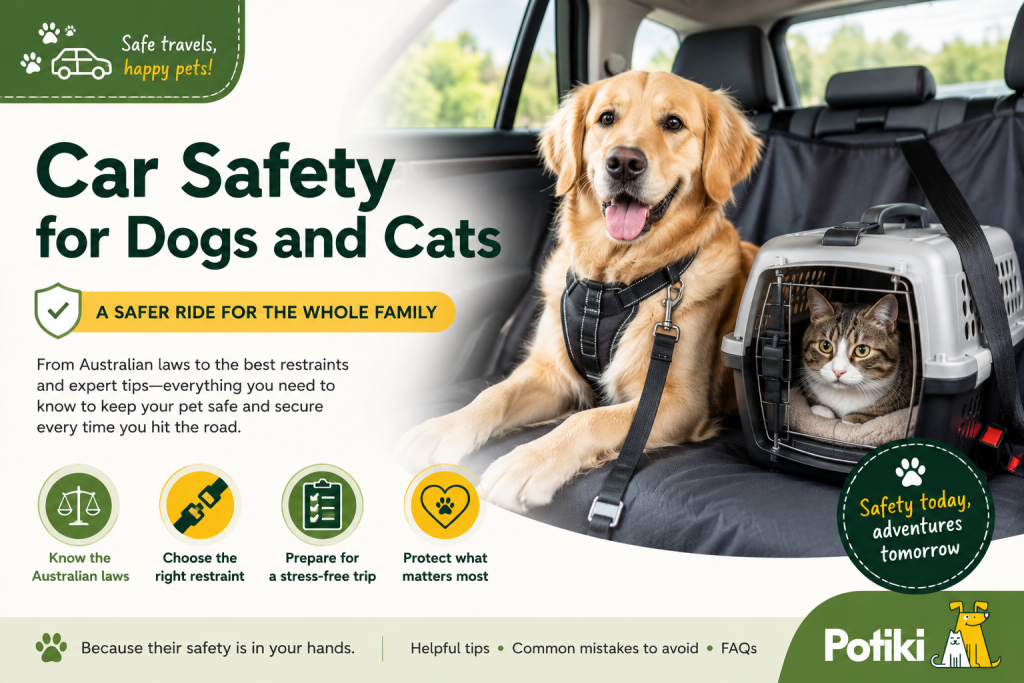
Many Australians drive with their dog or cat in the car, whether it’s to take them to a vet appointment, on a holiday, or to visit someone. But did you know that many pets travel without any safety restraints?
Just like humans, animals can get injured in car accidents as well, which is why car safety for your furry family member is just as important as car safety for the rest of your family.
Continue reading to learn more about car safety for dogs and cats, Australian laws and how to make your car trip safer for your beloved pet.
Australian Laws for Driving with Your Pet
In Australia, laws and regulations for travelling with pets differ from state to state, so it’s important to check the rules for the state you live in or are visiting to avoid penalties or fines.
| State | Rules and Regulations |
| New South Wales |
|
| Victoria |
|
| Queensland |
|
| Western Australia |
|
| South Australia |
|
| Tasmania, ACT and Northern Territory |
|
Other NSW laws:
- If your pet is injured due to being unrestrained, owners can face fines of up to $5,500 and up to six months’ jail time under the Prevention of Cruelty to Animals Act.
- Carrying an unrestrained dog in the back of a ute can result in heavy fines.
Why Car Safety for Dogs and Cats Matters
- If dogs and cats are unrestrained and there is a car accident, they can easily be thrown from the car or around in the car, resulting in serious injuries or even death.
- A scared or unrestrained pet can jump or fall from the car as soon as it is opened, or if a window is open.
- An unrestrained pet can easily be thrown around the car if the car suddenly stops.
- If your pet is unrestrained, it can cause distractions in the car, which can lead to serious car accidents.
- If your pet is sitting in your lap as you drive, it can limit your visibility of the road and lead to a car accident.
The Best Car Restraint Options for Your Dog Or Cat
Not all restraints work best for both dogs and cats, and not all are created equal. We break down the best restraint options in the table below.
| Restraint Type | Best For | Pros | Cons |
| Harness & belt clip | Dogs (most breeds and sizes) | Affordable and widely available online and in many pet stores | Some of the cheaper options may not be as protective |
| Secured crate or carrier | All dogs and cats, big and small | High level of protection in the event of a crash. Comfortable for both dogs and cats | May be too big for some cars, and needs to be fixed to your car |
| Car seat | Small dogs (under 10kg) | Gives your dog a good view of the road and is snug | Not suitable for cats or all dog breeds |
| Boot barrier/guard | Medium to large-sized dogs | Keeps dogs restricted in the boot area and is easy to use | It doesn’t always prevent injury in a crash, and you need to have a suitable car (4WD, etc) |
| Cat carrier and seatbelt | Cats | Secure and reduces stress | Must be hard-sided and anchored to protect your cat |
The Best Ways to Prepare Your Pets for Car Travel
Preparation makes a car trip more stress-free and fun for your whole family, including your furry family members. Here are the best ways to protect your dog or cat during a car trip:
Get the Right Restraint or Carrier
For dogs, a harness or a secure crate is safest, while cats prefer a hard-sided carrier secured with a seatbelt.
Before you begin driving anywhere, get your pet used to their restraint at home or in a still car. Talk to your veterinarian about recommended and trusted brands and the best restraint types for your pet’s breed and size.
Get Your Pet Used to the Car
Probably one of the most important things to do. Not all dogs and cats are going to enjoy car rides, so it’s important to get them used to it as much as possible before you actually need to go anywhere. Start by placing your pet in a car that is on but not moving, then take them for short drives and work your way up to longer ones.
Identification
Make sure your pets are microchipped and have up-to-date contact information on their collars in case they run off or get lost when the car stops.
Pack the Essentials
You pack the essentials for your kids before a car ride, so make sure you do the same for your pets. Include the following:
- A bottle of fresh water to fill up your pet’s water bowl
- Pet food
- Any necessary medications
- Their favourite toys or blankets for comfort
- A lead or leash
- Poo bags
- Contact information for your vet
- An updated photo of your pet, in case they run away or get lost
Plan Your Rest Stops
If you’re going on a long car trip, make sure you plan regular rest stops so your pet can get some fresh air, stretch their legs, go to the toilet, and have some food or water, just like we humans do!
Never Leave Your Pet Unattended in a Car
Sometimes you may need to get something quickly from the shops or go to an appointment, but that doesn’t mean you should leave your pet in the car unattended. It can make them anxious and is a danger to them, especially on hot summer days.
Either leave your pet at home, leave someone in the car with them, with the air conditioner running or windows open, or tie your dog’s lead to a railing while you duck into the shops quickly. But never leave them alone in the car.
Common Mistakes
When travelling with your dog or cat in the car, here are some mistakes you should avoid at all costs:
Letting Your Pet Sit in the Front Seat
Front seats are not made for pets. If the airbag is deployed, the impact can be fatal for your dog or cat.
Opening the Window Too Wide
Some dogs like to stick their head out of the window to feel the fresh air on their face, but if you open the window too wide, debris can fly into your dog’s face, or there is a risk of them trying to jump out.
If you need to open the window, make sure you only open it a little bit – enough for your dog to feel the wind on their face.
Feeding Your Pet a Meal Right Before a Car Trip
Like humans, dogs and cats can get car sick, too. The last thing you want is an accident to occur while you are in the midst of a road trip.
Feed your dog a light meal a few hours before your car trip. Otherwise, stop for a break and give them a treat.
Buying the Cheapest Restraint or Carrier Option
You may think you’re getting a bargain when buying a cheap car harness or carrier, but cheaper is definitely not always better.
Make sure you are buying something that has passed safety tests conducted by the Centre for Pet Safety, an internationally recognised testing body. Not all car harnesses or carriers are created equal.
Skipping the Carrier for Cats
Nobody wants a loose cat in the car, especially with its sharp claws, which can cause damage when it is scared or angry. That is an accident waiting to happen.
At Potiki, we understand how precious your pets are. We also know that the unexpected can happen at any time, leading to extremely high veterinary fees. These unforeseen circumstances are why it is best to be prepared with pet insurance. Potiki offer our customers flexible covers with excess and extras to give you and your family peace of mind. Visit our website to obtain a quick quote and explore our various coverage options.
FAQs
We recommend stopping every 2 hours or so on a long road trip. If you feel like you’re ready for a break, it’s safe to assume that your pet is ready for one too!
Most cats prefer to stay in their carrier, but you can take it out of the car to let your cat get fresh air and offer them water and treats.
The back seat or the boot area (with a dog barrier or crate) is the safest place for your pet in the car.
Keep your pet away from the front passenger seat; if the airbag deploys, it can harm your pet.
Yes, but only after checking with your vet. Your vet will prescribe you a medication for anxiety and car sickness. Never give your pet medication without checking with your vet beforehand.
No, standard dog leads are not strong or protective enough to restrain a dog in the event of an accident. You need to use a harness that connects to the car’s seatbelt system or a crate that is fixed to the vehicle.
A regular dog lead can cause serious neck injuries if the car is involved in an accident or comes to a sudden stop.
If you are involved in a car accident with your vet, it is important to get them (and yourself, if needed) immediate medical attention. Remember that animals cannot tell us what they are feeling.
Tell the vet the following information:
- Any unusual behaviour that your pet is exhibiting
- Any respiratory issues they may be having (heavy or laboured breathing)
- If your pet was unconscious for any period of time
- If your pet has trouble standing up or walking
- If your pet is limping
- Any vomiting
- The extent of your car accident
- Where your pet was sitting during the car trip
- How your pet was restrained during the car trip
Yes, pet insurance (both ‘Accident-Only’ and ‘Accident & Illness’ policies) does cover injuries sustained in car accidents as they are classified as ‘sudden and unexpected accidents’.
Talk to your pet insurance provider to find out exactly what is covered.